Home > Historical References

Tableaux Vivants: Historical References

This page showcases historical works of art, design, and literature that are described in Tableaux Vivants, along with a selection of objects and illustrations that inspired some of the details in the story's late Victorian setting. (It is recommended that you peruse this page after completing the game, as it does include spoilers for the game's story and puzzles.)

SPOILERS BELOW!

.

.

.

.

.

.

.

.

.

.

.

.

The Artworks
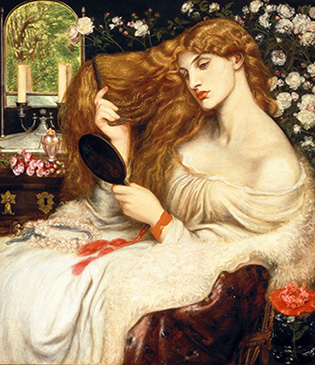
An oil painting of a red-haired woman in a white, off-the-shoulder gown, combing her hair and gazing into a hand mirror, seated at a vanity and surrounded by rose bushes, with a surreal view of a luminous forest where the vanity's mirror should be.

Lady Lilith
Dante Gabriel Rossetti (completed 1873)

(Source: Wikipedia)

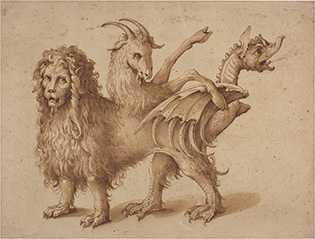
A drawing of a chimera in ink wash, chalk, and pencil on toned paper. The hybrid beast is part lion, goat, and serpent.

A chimera
Attributed to Jacopo Ligozzi (ca. 1590-1610)

(Source: Museo del Prado)

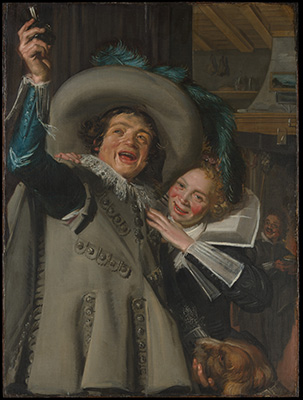
An oil painting of young man and woman in 17th century Dutch dress, both of whom smile and laugh. The man raises his glass to a toast, and a dog places her snout into the man's hand. The trio is posed in front of a curtain, and another gentleman stands further into the interior of the inn.

Young Man and Woman in an Inn
Frans Hals (1623)

(Source: The Metropolitan Museum of Art)

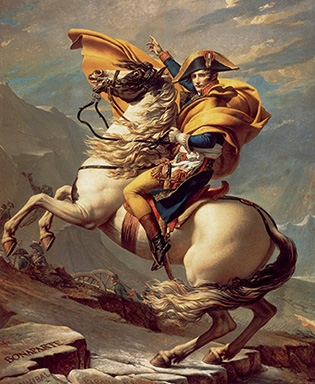
An oil painting of Napoleon Bonaparte riding a horse. They are posed in front of a dramatic alpine landscape, with soldiers and canons in the distance. The stallion rears up on his hind legs as Napoleon looks toward the viewer and points up to the sky, his cape sweeping dramatically behind them.

Napoleon Crossing the Alps
Jacques-Louis David (1801)

(Source: Wikipedia)


Theodora's Home and Personal Possessions
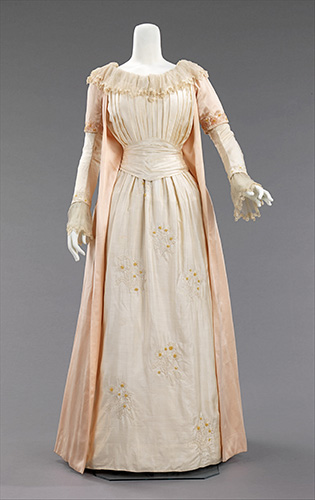
A photograph of an antique silk gown on a mannequin. It is pale peach and cream white, and it has a pleated bodice, a skirt embroidered with daisies, and collar and cuffs fringed with ruffled lace.

Tea gown (Liberty & Co., ca. 1885)

(Source: The Metropolitan Museum of Art)

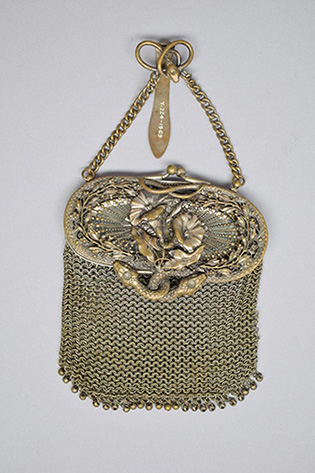
A photograph of a mesh metal purse hanging from a short chain. It has an ornately sculpted silvered brass enclosure in the shape of flowers and snakes.

Chatelaine purse (France, ca. 1890-1905)

(Source: Victoria and Albert Museum)

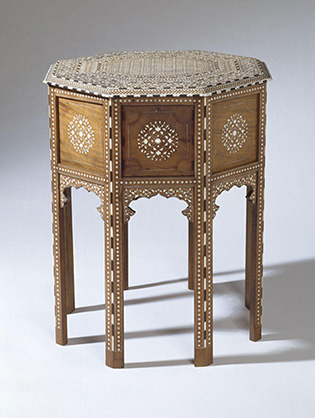
A photograph of a small, octagonal side table made from wood and inlaid with ivory and ebony in intricate geometric patterns.

Table (Hoshiarpur, Punjab, ca. 1880)

(Source: Victoria and Albert Museum)

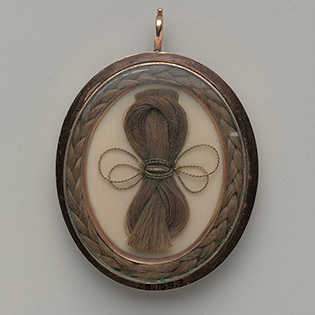
A photograph of a flat, oval pendant containing locks of hair artfully braided, knotted, and tied with a thin string.

Locket (Walter Robertson, ca. 1795)

(Source: The Metropolitan Museum of Art)

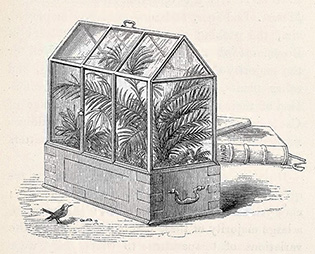
A black and white drawing of a glazed terrarium filled with ferns. A small bird stands nearby and books lie behind it.

A Wardian case (illustrated in 1842)

(Source: Internet Archive)

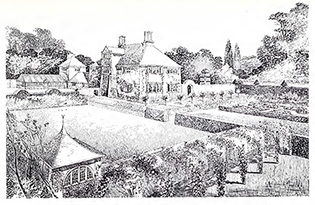
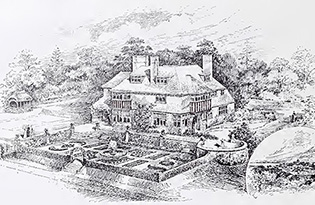
A black and white drawing of the exterior of an antique country home surrounded by formal landscaping. Another architectural drawing similar to the first.

Architectural designs from Hertfordshire and Sussex, featured in periodical Academy Architecture (1896)

(Source: Internet Archive)


The Designs by William Morris
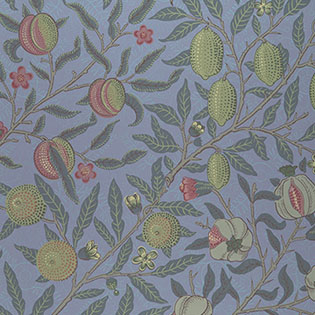
A detail of wallpaper with branches bearing stippled lemons, pomegranates, and flowers intertwined in an abstract floral pattern against a background of gentle blue.

Fruit, 1866 - in the Study

(Source: The Metropolitan Museum of Art)

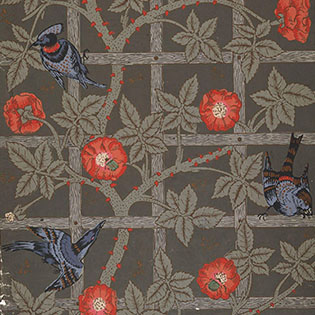
A detail of wallpaper with a repeating pattern that shows birds and flowers perched amidst climbing vines on a garden trellis. Highlights of red-orange and soft blue stand out against the wallpaper's background of muted tones of grey-brown.

Trellis, 1864 - in the Dining Room

(Source: Victoria and Albert Museum)

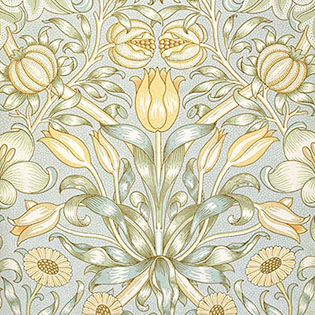
A detail of wallpaper illustrated with lily flowers and pomegranate fruits in muted, pastel tones of orange and blue-green.

Lily and Pomegranate, 1886

(Source: Victoria and Albert Museum)

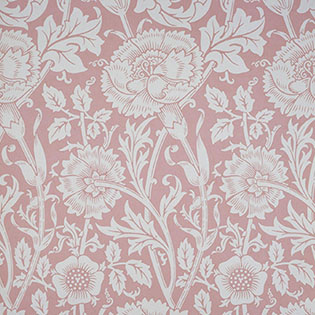
A detail of wallpaper with patterns of roses and carnations in white and soft, desatured pink.

Pink and Rose, 1890

(Source: Victoria and Albert Museum)

A detail of a woven upholstery textile of muted, earthy tones of green, blue, and burgundy, woven into intricate floral patterns of abstracted violets and columbine flowers.

Violet and Columbine, 1883

(Source: Victoria and Albert Museum)


The Books

The books described in Tableaux Vivants were selected for their titles, historical relevance, and/or thematic resonance. (With one notable exception — the book of poems by Christina Rossetti — the content of these books is not substantially referenced in the story.)

"The Mysterious Key and What It Opened" (1867) by Louisa May Alcott. (Read at Project Gutenberg)

"The Banquet (Il Convivio)" (1304, translated by Sayer in 1887) by Dante Alighieri. (Read at Project Gutenberg)

"La Bourse (The Purse)"(1832) by Honoré de Balzac. (Read at Project Gutenberg)

"Through the Looking-Glass, and What Alice Found There" (1871) by Lewis Carroll. (Read at Internet Archive)

"New Poems by Christina Rossetti: Hitherto Unpublished Or Uncollected" (1896) edited by William Michael Rossetti. (Read at Internet Archive)

"Wine, the vine and the cellar" (1863) by Thomas George Shaw. (Read at Internet Archive)

"On the Growth of Plants in Closely Glazed Cases" (1842) by Nathaniel Bagshaw Ward. (Read at Biodiversity Heritage Library)

"Choice Stove and Greenhouse Ornamental-Leaved Plants" (1876) by Benjamin Samuel Williams. (Read at Biodiversity Heritage Library)

A simplified symbol of an ouroboros with the initials T.V. in the center.